
AI6 min read
Build vs. Buy Isn't a Hard Decision. It's a Symptom.
When the choice feels impossible, the problem is almost never the vendors. It's the requirements you never wrote down.
View entry→October 15, 2026

A year of AI-assisted builds taught me the hard part is not the building. It moved upstream, and it got more expensive.
Joe Guster
September 23, 2026 · 6 min read
I shipped more this year than in any year of my career. A shoe-tracking app from idea to Apple approval. A decade-old directory platform rebuilt and back in production in two weeks. Client systems that would have taken a quarter, done in a sprint. By every measure I used to care about, this was the most productive stretch I have had.
The lesson was not the one I expected.
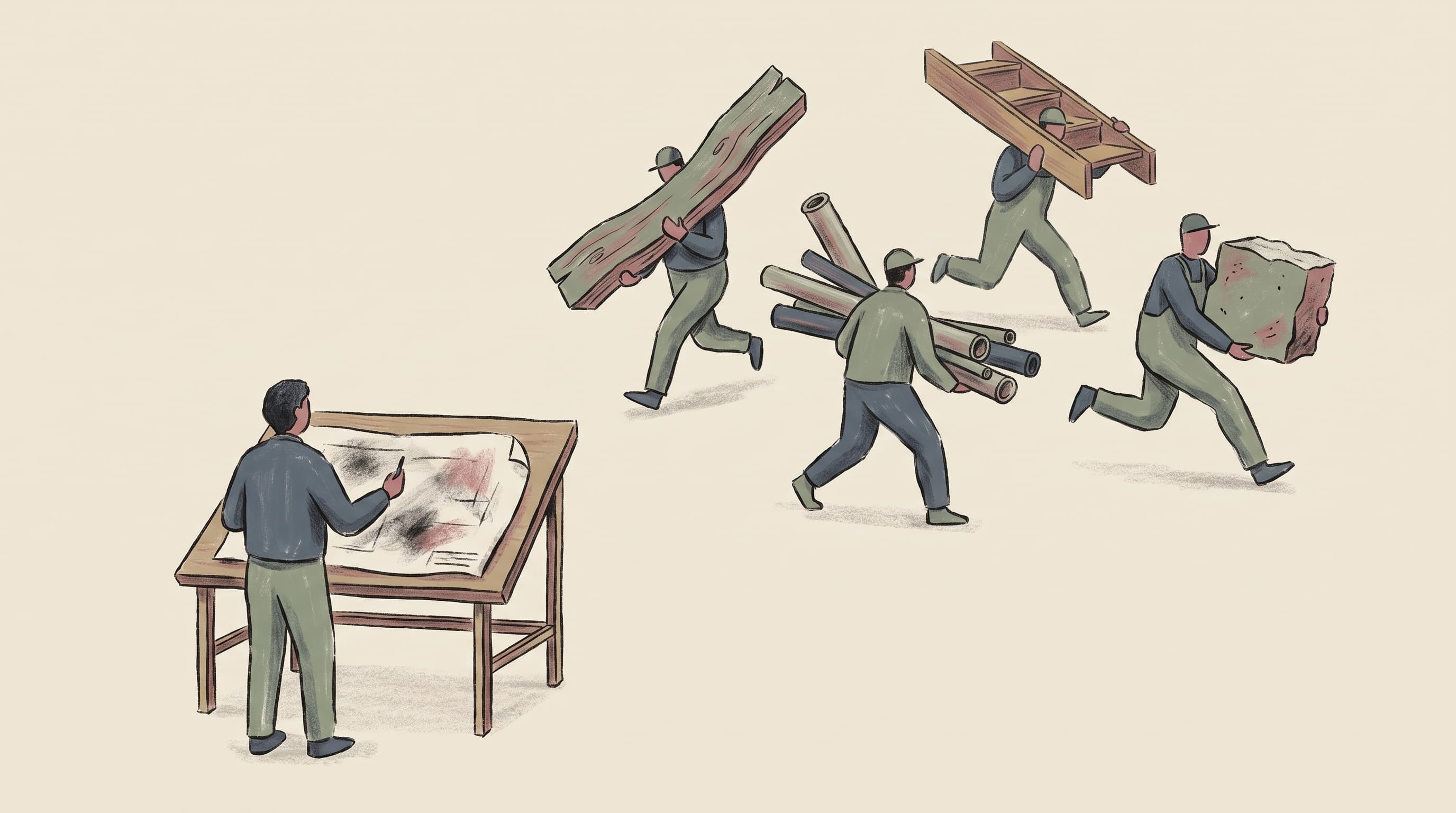
I expected to learn that AI is good at building. It is. That part is settled, and honestly it is the least interesting thing about the year. What I actually learned showed up in the gaps between the wins, in the work that moved fast in the wrong direction before anyone noticed. The hard part of building software did not go away. It moved. And where it moved, it got more expensive.
Here is the thing nobody says out loud about the old way of building. It was slow and expensive, and that was load-bearing.
When a feature took three weeks and real money, you thought before you built it. You could not afford not to. The cost of being wrong was high enough that it forced a conversation. What are we actually trying to do here. Who is this for. What has to be true for this to matter. You did not always run that conversation well, but the price of building made you run it at all.
Changing direction hurt, so you planned to avoid it. Scope was a negotiation because every line item cost something. The friction was annoying. It was also doing quiet, unglamorous alignment work in the background, every single day, whether you appreciated it or not.
That tax is gone now. And we are acting like that is pure upside.
You can build the wrong thing in a weekend now. You can build three versions of the wrong thing in a weekend, and all three will look polished.
The forcing function is gone, but the work it used to force is still required. The difference is that now you have to do it on purpose. Nothing in the tooling makes you. The AI will not stop and ask whether you have actually agreed on what you are building. It will just build, beautifully, at speed, in whatever direction you point it.
And that is the whole problem in one line. Speed does not fix a fuzzy spec. It multiplies it. If your requirements are vague, you now produce vague output faster, in more places, with more confidence that something is happening. The fuzziness does not get resolved by motion. It gets distributed.
I have watched this play out on enough projects this year to recognize the shape of it early now.
It does not look like failure. That is what makes it dangerous. It looks like progress. The repo is active. Features are landing. The demo runs. Everyone feels productive because everything is moving. Then you step back and realize the team has built, refined, and refactored its way toward a target nobody ever actually defined. Three people aligned beautifully on an unstated assumption that turns out to be wrong. Now you are not shipping. You are reworking, and the rework is as fast and as confident as the original mistake.
Velocity looks great in that moment. Progress is close to zero. The faster the tooling, the longer you can run in the wrong direction before the gap between motion and progress becomes impossible to ignore.
This is the reframe that changed how I run every engagement.
The scarce skill was never typing the code. It is even less so now. The scarce skill is turning fuzzy business intent into something precise enough to build, and holding that alignment steady while the work moves fast around it. Deciding what the thing is. Deciding who it is for. Deciding what you are deliberately not doing. That work did not get automated. It got more valuable, because everything downstream of it now happens so fast that a mistake upstream propagates before you can catch it.
I have written before that you should put structure first and AI second. A year ago that was a principle I believed. Now I have a year of receipts. It is not a preference. It is the difference between AI making you fast and AI making you fast at going nowhere.
This is why I will not start a build with a client until we have done the unsexy work of getting aligned on objectives and requirements first. Not because building is hard. Because building the right thing is the part the speed cannot help you with.
Here is the payoff.
When founders come to me stuck, a surprising amount of the time they are stuck on a decision that looks technical but is not. Which framework. Which platform. Which vendor. They have a comparison spreadsheet with fourteen rows and they have been staring at it for two weeks.
Most of the time, that agony is a symptom. You cannot make a clean decision on top of a fuzzy foundation, so the decision feels enormous, and choices that are actually reversible start to feel permanent. Do the alignment work first, get genuinely clear on what you need this thing to do, and most of those decisions shrink. They become small, low-stakes, and reversible, which is exactly what they should have been the whole time.
So no, you probably should not be agonizing over which vendor.
Next time, I want to look at where the fuzziness usually shows up first: the handoff, when a polished, AI-written spec lands in front of the people who have to build it. It reads very differently from their side of the table.
For now, the takeaway is the one this year kept teaching me in different costumes. The bottleneck moved upstream. The building got cheap. The deciding got expensive. Build accordingly.
Practitioner Circle
Get a weekly deep dive into UI architecture and practitioner workflows. No fluff, just craft.
When the choice feels impossible, the problem is almost never the vendors. It's the requirements you never wrote down.
View entry→October 15, 2026
The person who should own your product decisions isn't a senior PM or an architect. It's someone who knows what each decision costs to build, because they still build.
View entry→October 9, 2026
An idea is still an idea, even with good formatting. The question isn't whether your spec is detailed, it's whether it's decided.
View entry→October 5, 2026